The word tokenisation has become one of the most overused and misunderstood terms in modern finance.
Scroll through LinkedIn or any major tech platform, and you’ll see bold claims: “Real estate is now tokenised.” “Own fractions of property globally.” “The future of ownership is here.”
It sounds revolutionary.
But according to Reeves Knyght a CEO, Founder, board director, and active participant in global capital markets much of what is being promoted today is not true tokenisation.
And that distinction matters more than most people realize.
The Core Problem: Tokenisation vs. Representation
At its core, tokenisation is meant to digitally represent ownership of real-world assets on blockchain infrastructure in a legally enforceable way.
But here’s where the industry is currently falling short:
Most projects are not tokenising ownership.
They are tokenising representations of ownership.
That difference is subtle but critical.
In many so-called “tokenised real estate” platforms, what investors actually receive is:
* Shares in a company that owns the property
* A contractual promise tied to an intermediary
* Or exposure to value, not direct ownership
This creates a structure that is still dependent on traditional systems defeating the core promise of tokenisation: disintermediation and transparency.
A Bold Claim: Only Two Regions Are Doing It Right
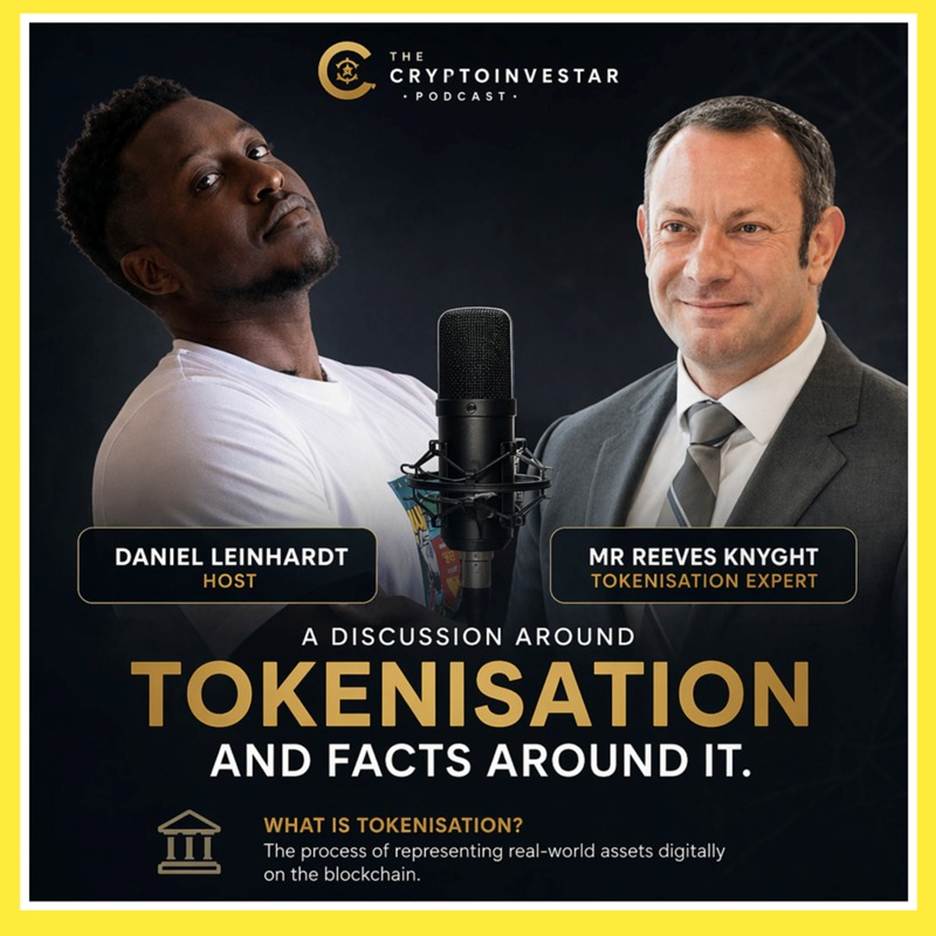
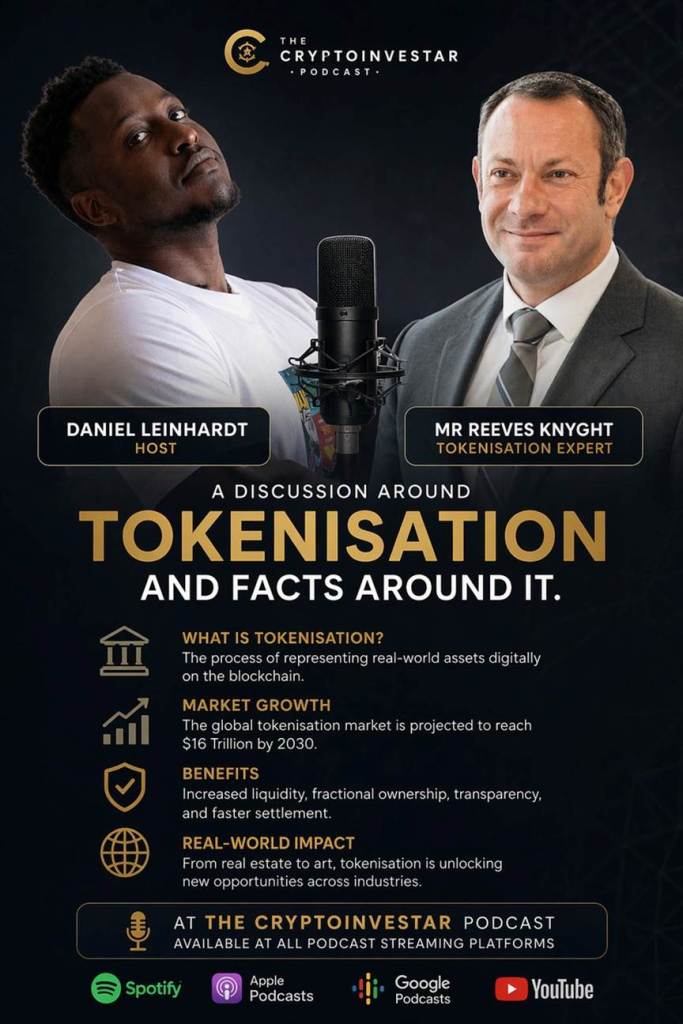
In a recent conversation on The CryptoInvestar Podcast, Reeves Knyght made a statement that challenges the global narrative:
“Only Dubai and Saudi Arabia are currently enabling true fractional ownership of tokenised assets at scale”.
While many countries are experimenting with blockchain-based asset systems, these two regions have made significant progress in aligning:
* Legal frameworks
* Regulatory clarity
* Infrastructure
* Institutional participation
This alignment is what allows real ownership not just digital wrappers to exist.
Why the Rest of the World Is Lagging
The reality is that tokenisation is not just a technology problem.
It is a legal and structural transformation.
For true tokenisation to work, multiple layers must align:
1. Legal Recognition of Digital Ownership
Ownership recorded on-chain must be recognized in courts and legal systems.
2. Regulatory Frameworks
Governments must define how tokenised assets are issued, traded, and taxed.
3. Custody & Compliance
Secure infrastructure must exist to manage identity, ownership, and transfers.
4. Market Liquidity
Without buyers and sellers, tokenised assets remain illiquid defeating their purpose.
Most jurisdictions are still navigating these layers, which is why many projects default to simpler but less transformative models.
The Social Media Illusion
One of the biggest drivers of confusion is how tokenisation is presented online.
On platforms like LinkedIn, the terms “tokenisation” and “fractional ownership” are often used interchangeably.
But they are not the same.
Fractional ownership can exist without blockchain
Tokenisation does not automatically guarantee ownership rights
This has led to a wave of:
* Misleading marketing
* Overstated adoption claims
* Investor misunderstanding
And ultimately, a disconnect between expectation and reality.
Why Tokenisation Still Matters
Despite the current gaps, dismissing tokenisation would be a mistake.
Because when done correctly, it has the potential to reshape global finance in ways we’ve never seen before.
1. Accessibility
Investors can participate in high-value assets without large capital requirements.
2. Liquidity
Traditionally illiquid assets like real estate can be traded more easily.
3. Transparency
Blockchain provides verifiable ownership records.
4. Efficiency
Reduced reliance on intermediaries lowers costs and friction.
This is why institutional players, governments, and financial firms are still heavily investing in the space.
Insights from Switzerland: Precision Meets Innovation
Another region worth watching closely is Switzerland a global hub for financial innovation.
Through its progressive regulatory approach and strong banking heritage, Swiss-based tokenisation initiatives are exploring:
* Structured digital asset frameworks
* Tokenised securities
* Institutional-grade infrastructure
These ecosystems are not driven by hype but by precision, compliance, and long-term scalability.
It is this kind of approach that could eventually bridge the gap between experimentation and real-world adoption.
The Road Ahead: From Narrative to Reality
Tokenisation is still in its early innings.
The technology exists.
The vision is clear.
But the execution is incomplete.
For tokenisation to reach its full potential, the industry must move beyond:
* Buzzwords
* Marketing narratives
* Superficial implementations
And focus on building:
* Real ownership structures
* Legal clarity
* Scalable infrastructure
* Institutional trust
Why This Conversation Matters Now
We are at a critical point in financial evolution.
Just as the internet reshaped communication, tokenisation has the potential to reshape ownership itself.
But only if it is built correctly.
This is why conversations with practitioners like Reeves Knyght are essential because they bring clarity in a space filled with noise.
For a deeper, unfiltered breakdown of these insights including Reeves’ perspective on global markets, regulatory gaps, and the future of tokenised ownership listen to the full episode: at The CryptoInvestar Podcast
👉 Tokenisation Truths EXPOSED: Why Only Dubai & Saudi Arabia Are Doing It Right On The CryptoInvestar Podcast
Available now on all major streaming platforms.
Final Thought
Tokenisation is not a trend.
It is an infrastructure shift.
But like all major shifts, it will take time, precision, and honest conversations to get there.
The sooner the industry separates reality from narrative, the faster true innovation can begin.


Leave a Reply